
The Art of Jiu Zhuan Da Chang: A Culinary Masterpiece
Discover the rich tradition of Jiu Zhuan Da Chang, a hallmark of Shandong cuisine. Learn the intricate cooking process and essential tips for creating this authentic dish.
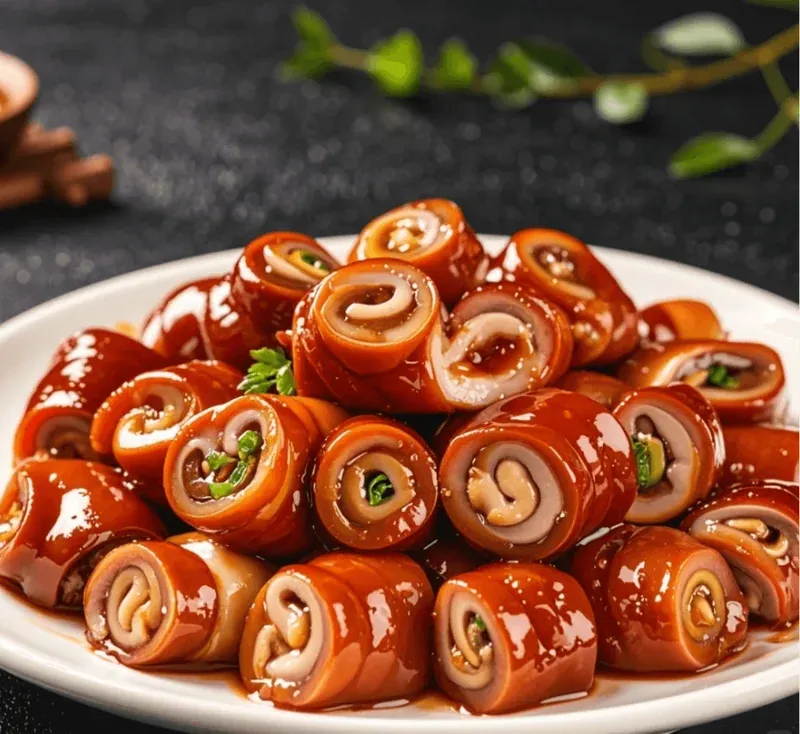
Braised Intestines in Brown Sauce, known as Jiu Zhuan Da Chang, is celebrated as a pinnacle of Shandong cuisine. Originating in the vibrant city of Jinan during the Qing Dynasty, its name, meaning ‘Nine Turns,’ pays homage to the complex, multi-stage preparation that mirrors the intricate practices of Taoist alchemy. This dish is renowned for its deep reddish-brown sheen, a delightful combination of tenderness and chewiness, and a flavor that expertly balances sweetness, tang, and a touch of heat. Mastering this recipe is truly a testament to a chef’s prowess in meticulous cleaning, precise folding, and perfect temperature regulation.
📋 Ingredients
- Approximately 1kg of fresh pork intestines
- 2 tablespoons flour and 1 tablespoon vinegar for cleaning
- About 48g rock sugar for glazing
- 2 tablespoons soy sauce, combining both light and dark varieties
- 3 tablespoons premium aged vinegar (such as Zhenjiang or Shanxi)
- 2 tablespoons Shaoxing wine
- 1 teaspoon white pepper powder
- 1/2 teaspoon each of cinnamon and star anise powders
- 1/2 teaspoon sand ginger powder (Shan Nai)
- 30g each of finely minced ginger and garlic
- 2 scallions (use only the white parts, minced)
- 500ml vegetable oil for frying
- 1 cup bone broth or water
🔪 Cooking Instructions
Step 1: Thorough Cleansing
- Flip the intestines inside out and scrub with flour, salt, and vinegar repeatedly to eliminate all odors and impurities. Rinse under cold water until they are impeccably clean.
Step 2: Nesting and Pre-cooking
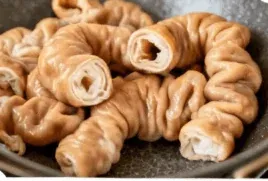
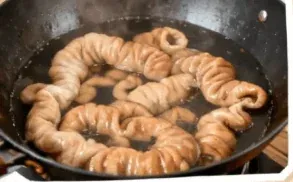
- Fold the intestines by inserting one end into the other, creating a thick, multi-layered tube. Secure with toothpicks if needed. Boil in water with ginger, scallions, and Shaoxing wine for 60–90 minutes until tender. Allow to cool before slicing into rings about 3cm thick.
Step 3: The Golden Fry
- Heat oil to 180°C (350°F) and deep-fry the intestine rings for about 1–2 minutes until their surface achieves a golden-red, slightly crispy finish. Drain immediately to maintain their shape and texture.
Step 4: Caramelization and Braising
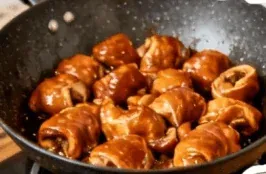
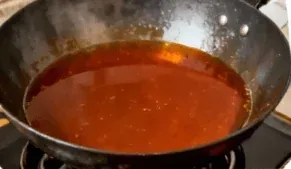
- In a clean wok, heat a bit of oil and dissolve the rock sugar until it turns amber. Add minced ginger, garlic, and scallions to release their aroma. Introduce the broth, soy sauce, vinegar, and fried intestines. Simmer gently.
Step 5: The ‘Nine Turns’ Reduction
- Season with white pepper, cinnamon, star anise, and sand ginger powders. Continue simmering while frequently basting the intestine rings with the sauce. As the liquid reduces, it transforms into a thick, glossy glaze that adheres to the meat—capturing the essence of the ‘Nine Turns.’

Key Insights & Advice
- Meticulous Cleaning is Crucial: Thorough cleaning is essential to maintain the dish’s flavor harmony by eliminating unpleasant odors.
- Mastering the Nesting Technique: The nesting method is key to achieving the distinct texture that characterizes this dish, providing a satisfying mouthfeel.
- Balancing Five Flavors: The interplay between vinegar and sugar is vital for cutting through the richness of the intestines, while spices add depth with bitter and spicy notes.
- Natural Sauce Thickness: Avoid using starch to thicken the sauce; the thickness should naturally develop from reduced sugar and collagen from the intestines.
🧪 Nutritional Information (Per Serving)
- Calories: Approximately 420 kcal
- Protein: 18 g
- Total Fat: 32 g
- Carbohydrates: 15 g (chiefly from the rock sugar glaze)
- Iron: 12% DV
- Sodium: 650 mg