
Discover the Rich Heritage of Klang's Herbal Pork Soup
Delve into the authentic preparation of Klang's Bak Kut Teh, a traditional herbal pork soup. Learn about its history, key ingredients, and ritualistic way of eating.
In the bustling port city of Klang, Malaysia, a culinary gem known as Bak Kut Teh has been warming the souls of locals and visitors alike for generations. Despite its name, which translates to “Meat Bone Tea,” this hearty dish contains no tea leaves. Instead, it is an aromatic broth brimming with tender pork ribs and an array of traditional Chinese herbs.
Historically, this dish served as a nourishing “tonic” for laborers, providing them with the energy to get through long days of work. Today, the Klang-style Bak Kut Teh is celebrated worldwide for its rich, dark, and herbal broth, setting it apart from the lighter, peppery version found in Singapore. Here’s how you can bring this legendary dish to your kitchen.
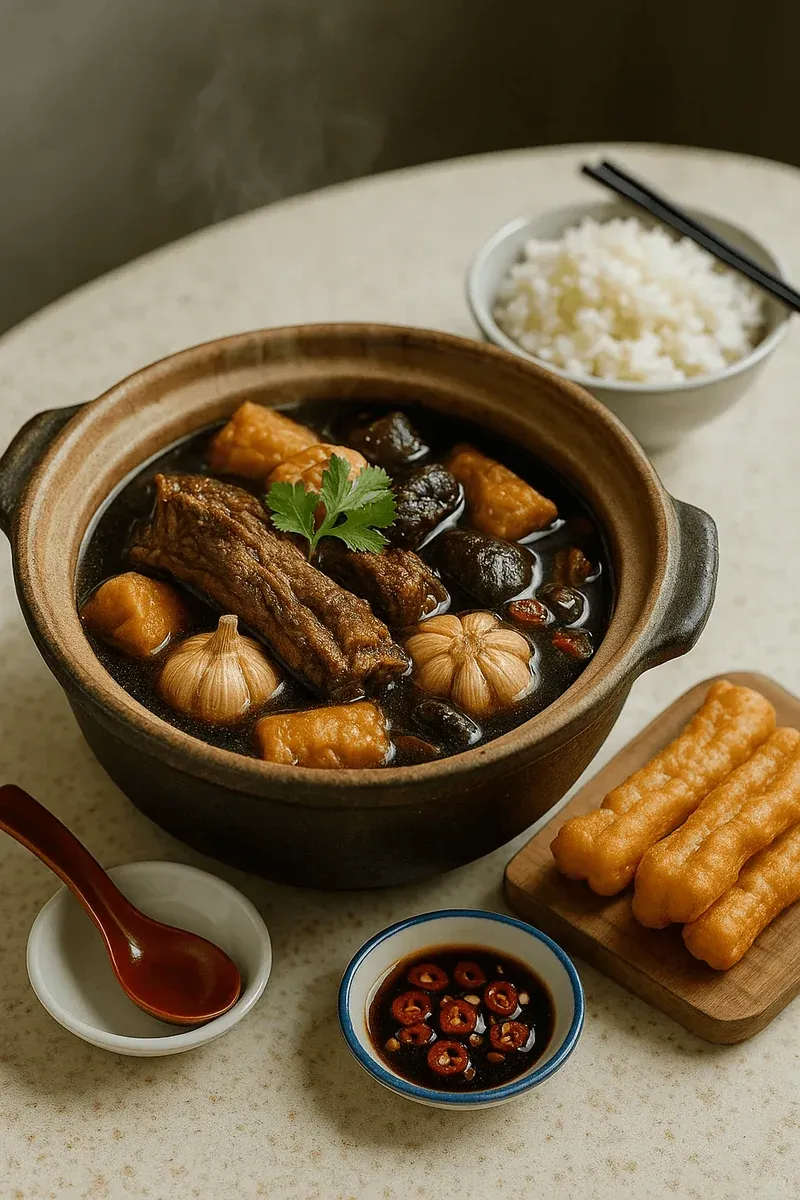
📋 Ingredients
A. The Meat & Texture
- 1.2 kg (about 2.6 lbs) Pork Spare Ribs: Cut into 6–7 cm segments.
- 600g (approximately 1.3 lbs) Pork Belly: Leave whole for juiciness during cooking.
- 600g (around 1.3 lbs) Pork Trotters/Hocks: (Optional) Adds natural thickness to the broth.
- 120g Dried Shiitake Mushrooms: Soak in 800ml warm water, reserving 300ml of the soaking liquid.
- 180g Whole Garlic Bulbs: Keep the skin on for a mellow, nutty finish.
- 200g Fried Bean Curd Puffs (Tau Pok): Halved to absorb the flavorful broth.
- 150g Dried Bean Curd Skins (Fuzhu): Soaked and drained.
B. The “Sacred” Herbal Bag (The Soul of the Dish)
- 10g Angelica Sinensis (Dang Gui): Promotes circulation and adds an earthy aroma.
- 12g Codonopsis (Dang Shen): Provides energy and subtle sweetness.
- 12g Solomon’s Seal (Yu Zhu): Balances the broth with a cooling effect.
- 6g Szechuan Lovage (Chuan Xiong): Supports heart health.
- 8g Rehmannia (Shu Di Huang): Imparts the soup’s signature dark hue.
- 4g Cinnamon Stick & 3g Dried Tangerine Peel: Infuses warmth and citrus notes.
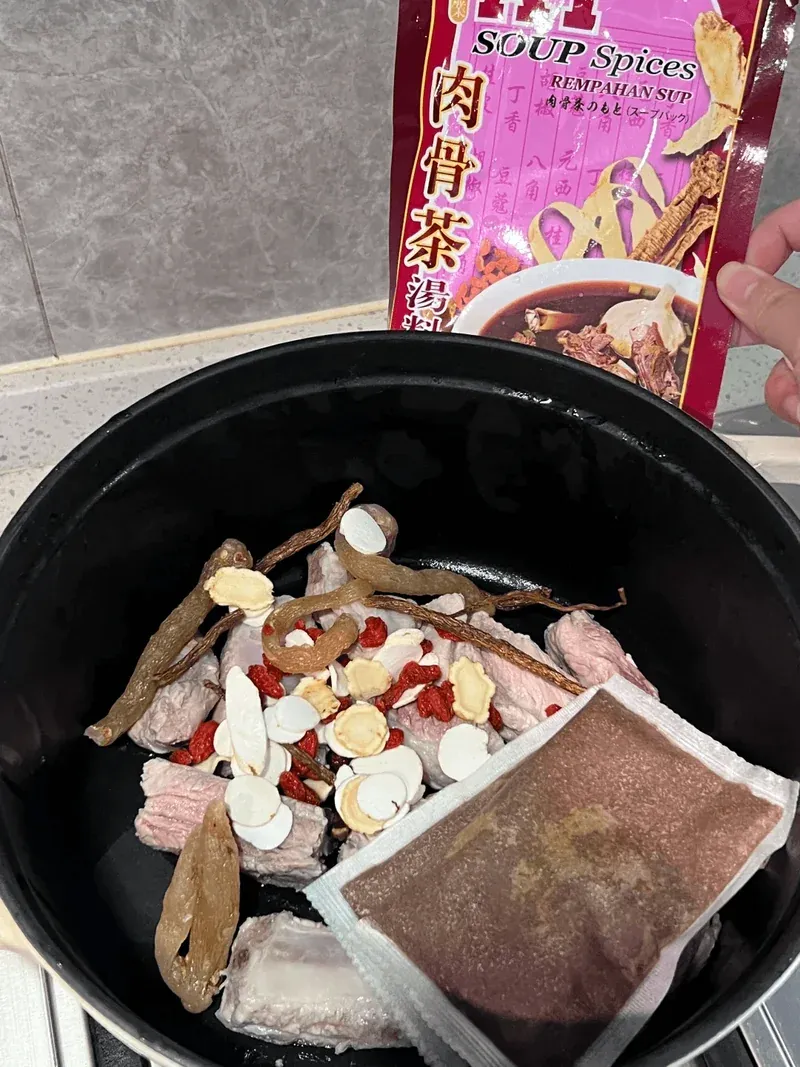
- 8g Goji Berries: (Add at the very end). (Alternatively, use a high-quality store-bought 50-60g Bak Kut Teh spice pack for the “Klang Black Soup” style.)
C. Seasoning & Base
- 3 Liters Fresh Water + 300ml Reserved Mushroom Water.
- 40ml Light Soy Sauce & 20ml Dark Soy Sauce.
- 10ml Sweet Soy Sauce: Delivers a rich, dark sheen.
- 18g Rock Sugar: Adds a smooth, rounded sweetness.
- 12-16g Sea Salt: Adjust to taste.
🔪 Instructions
Step 1: The Master Blanch
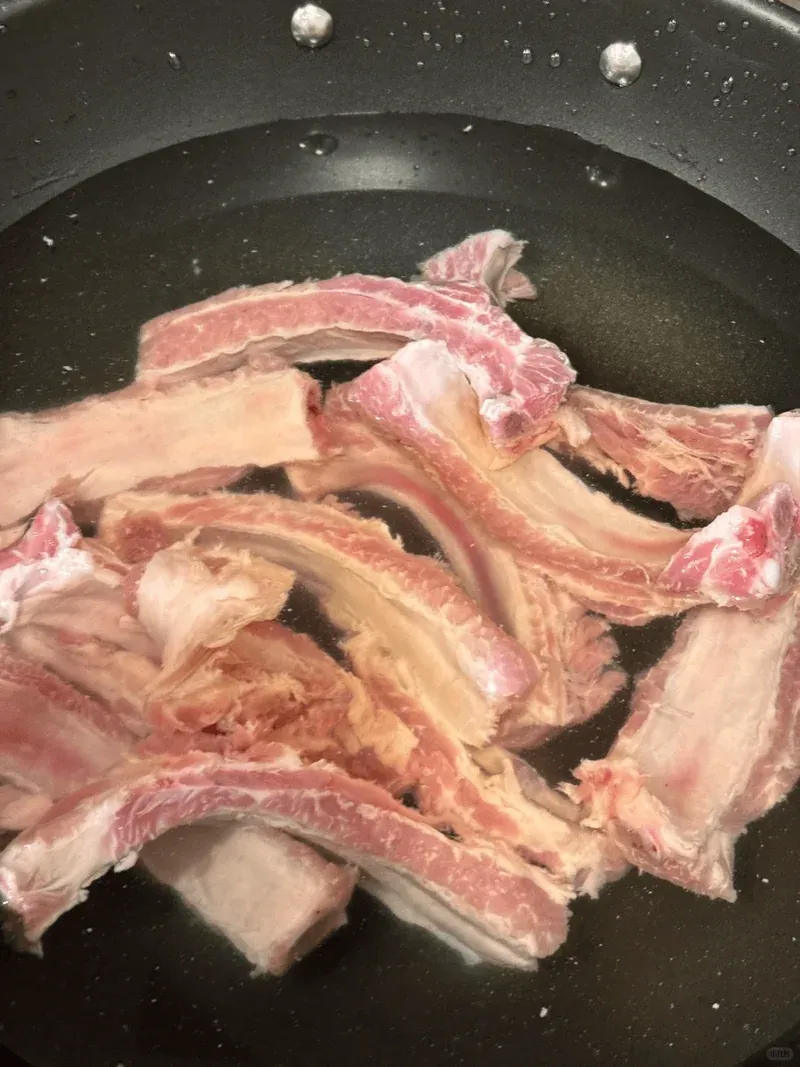
Place the spare ribs, whole pork belly, and trotters in a large pot filled with cold water. Bring it to a boil for 3–4 minutes to draw out impurities. Remove the meat, rinse under cold running water, and set aside.
- Culinary Tip: Starting with cold water helps maintain a clear, non-greasy broth.
Step 2: Infusing the Herbal Essence
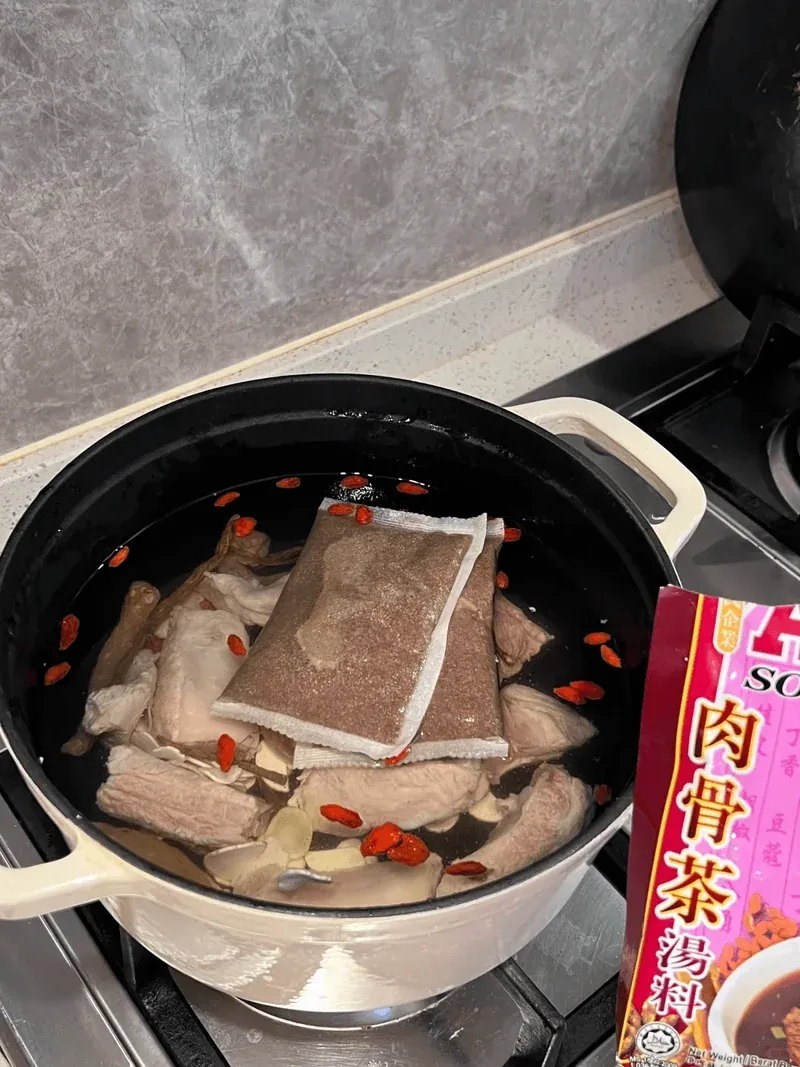
In a sturdy soup pot, mix 3L water, 300ml mushroom water, the herbal bag (excluding goji berries), and whole garlic bulbs. Bring to a boil, then reduce heat and simmer for 25 minutes to ensure the flavors and medicinal properties are fully released.
Step 3: The Slow Braise
- Incorporate the blanched meat, mushrooms, soy sauces, and rock sugar into the herbal base.
- Keep at a gentle simmer (small bubbles) for 60–70 minutes, skimming off any excess foam or oil.
- Gradually add salt to taste. Introduce the bean curd puffs and skins, simmering for another 8–10 minutes to let them soak up the flavors.
- Five minutes before you finish cooking, add the goji berries. Turn off the heat and allow the soup to “rest” for 10 minutes to meld the flavors.
Step 4: The Presentation
Take the whole pork belly, slice it into bite-sized pieces, and return them to the pot. Serve the ribs, belly, and trotters in clay bowls, ladling the piping hot, aromatic black soup over them.
🥢 How to Eat Like a Local (The Ritual)
To savor the true Klang experience, accompany your Bak Kut Teh with:
- Fried Dough Crullers (You Tiao): Dip them in the soup until slightly softened.
- Chili-Garlic Soy Dip: Mix bird’s eye chilies with light and dark soy sauce for a spicy kick.
- The “Tea” Connection: Paradoxically, Bak Kut Teh is best enjoyed with strong Kung Fu tea (like Oolong or Tie Guan Yin). The tea helps cleanse the palate of the rich pork fat.
💡 Expert Notes
- Traditional Chinese Medicine (TCM) Influence: Ingredients like Dang Gui and Dang Shen emphasize the dish’s role as a “functional food,” appealing to health-conscious eaters.
- Klang vs. Singapore: The contrast between the “Herbal Hokkien style” (Klang) and the “Peppery Teochew style” (Singapore) attracts curious food enthusiasts.
- The Slicing Secret: Cooking the pork belly whole and slicing it afterward retains moisture, preventing the lean parts from drying out.
🧪 Nutrition Information (Per Serving)
- Calories: Approximately 420 kcal
- Protein: About 35g (High)
- Net Carbs: Around 8g (Keto-friendly if enjoyed without rice or dough)
- Benefits: Supports joint health (collagen), offers anti-inflammatory properties (ginger/herbs), and is rich in iron.