
Authentic Sweet and Sour Pork: A Culinary Gem from Ancient China
Discover the authentic taste of Tang Cu Li Ji, a traditional Chinese sweet and sour pork dish, with our detailed recipe that highlights its unique preparation and ingredients.
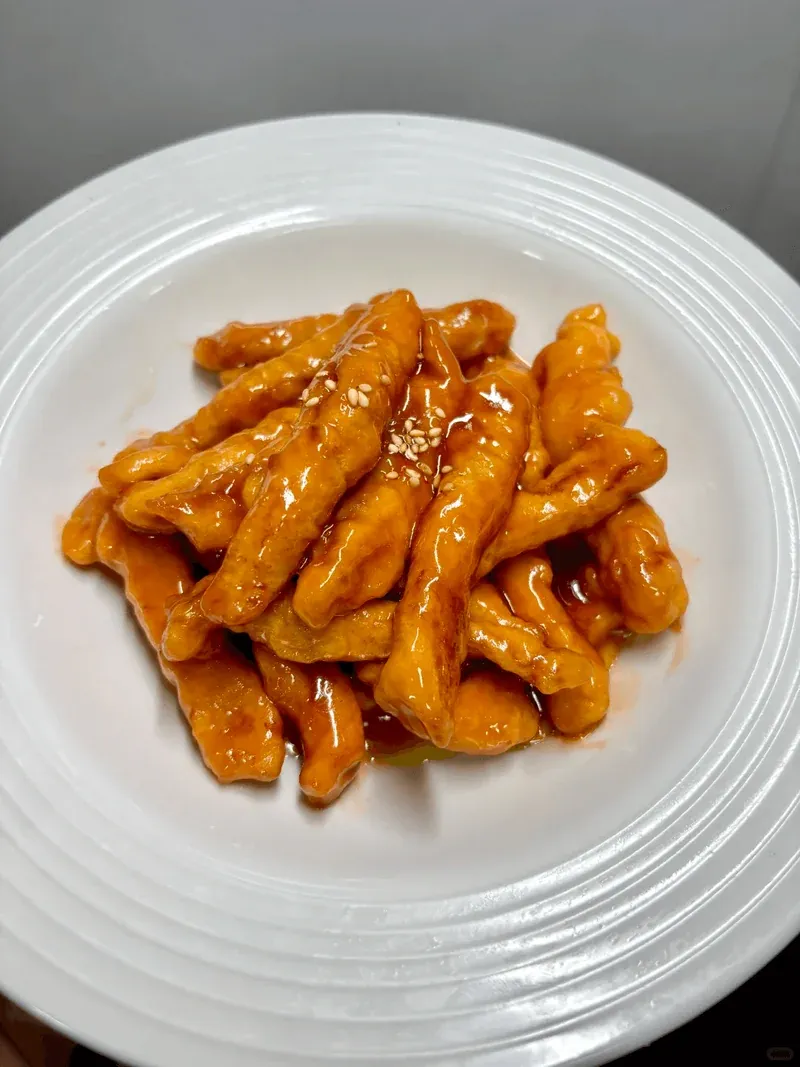
If your experience with sweet and sour pork has been limited to the sugary, ketchup-laden version from takeout menus, prepare to be enlightened by an age-old culinary tradition. The genuine Tang Cu Li Ji (糖醋里脊) offers a harmonious blend of flavors achieved through the art of caramelization and the strategic use of various vinegars, rather than relying on tomato sauce.
This cherished recipe employs the “Ancient Scalded Starch” method coupled with a “Triple-Fry” technique, ensuring that each morsel remains irresistibly crisp for hours. This dish is a nostalgic taste of Chinese heritage.
📋 Ingredients
The Pork Tenderloin
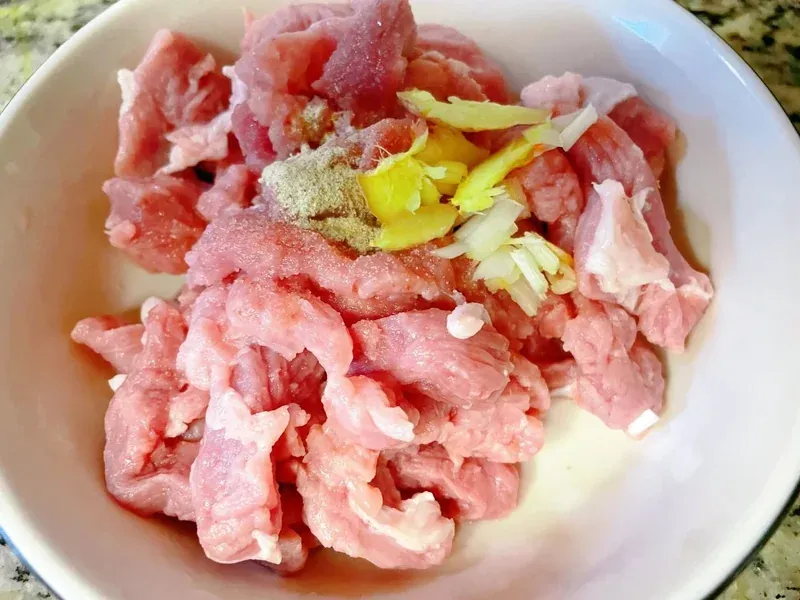
- 300g (approx. 0.66 lbs) Pork Tenderloin: Slice into uniform strips.
- Seasoning: A dash of salt and white pepper.
The Balanced Sweet & Sour Sauce (Sans Ketchup!)
- 70g White Sugar: Forms the sweet foundation and glossy finish.
- 37g 9-Degree Rice Vinegar: Offers a crisp, clean acidity.
- 20g Aged Vinegar (Chinkang Vinegar): Infuses a rich, smoky essence.
- 10g Light Soy Sauce: Adds umami depth.
- 5g Dark Soy Sauce: Primarily used for its deep amber hue.
- 1g Salt: Enhances and balances the sweet notes.
The Special “Scalded Starch” Batter
- Base: 120g Potato Starch (divided into 15g and 105g).
- Liquid: 20g Boiling Water + 70g Room Temperature Water.
- Finish: 20g Cooking Oil (Neutral oil like canola or vegetable).
🔪 Step-by-Step Instructions
1. Preparing the Pork (Achieving a “Springy” Texture)
Begin by rinsing the pork strips and patting them dry with paper towels. Add salt and white pepper, then knead the meat vigorously until it becomes tacky, a process known as “Qi Jiao.” This step is crucial for achieving a firm, bouncy texture after frying.
2. Creating the Master’s Batter: The Scalded Starch Technique
This technique is what keeps the crust from turning soggy:
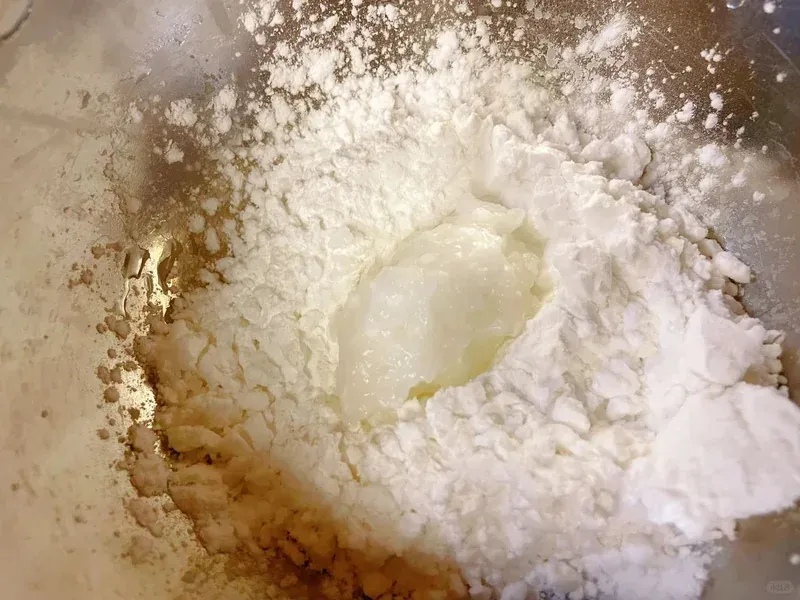
- Scalding: Combine 15g of potato starch with 20g of boiling water. Stir until a clear, gelatinous paste forms.
- Mixing: Blend the remaining 105g of dry starch into the paste.
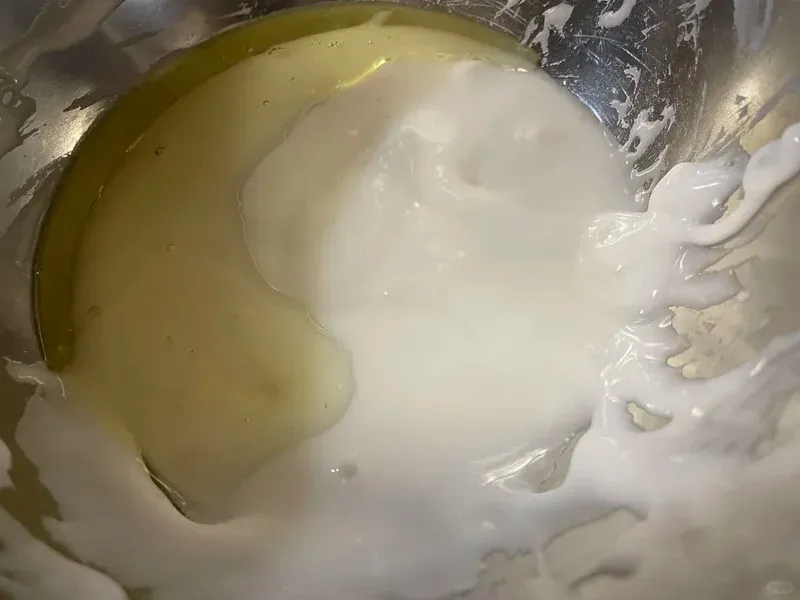
- Adjusting: Gradually add 70g of cool water until the batter is smooth.
- The Non-Stick Secret: Mix in 20g of oil to prevent the pork strips from sticking together during frying.
3. Employing the “Triple-Fry” Technique for Maximum Crispiness
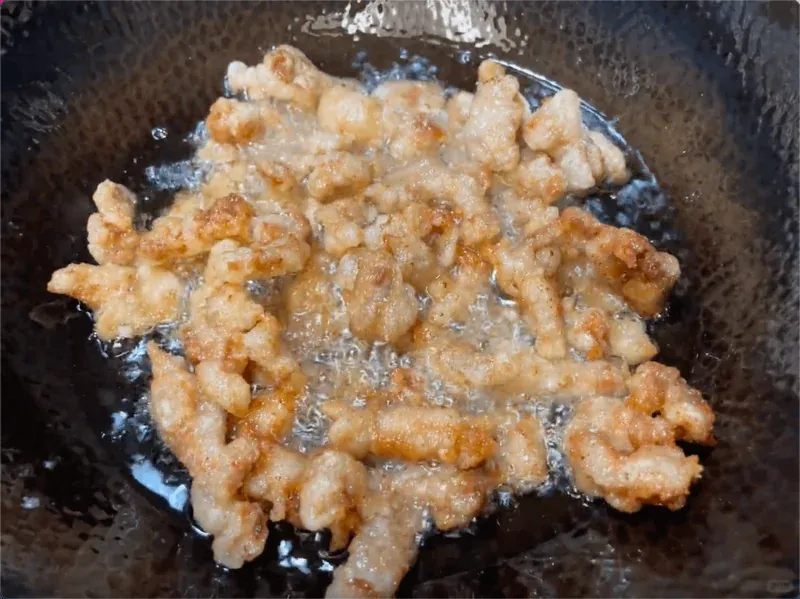
Initial Fry: Heat oil to 325°F (160°C). Add the pork, separating the pieces as they cook. Remove when they reach a pale golden-red color.
- Second Fry: Increase the temperature slightly and fry for an additional 60 seconds, allowing moisture to escape.
- Final Flash-Fry: When the oil begins to smoke lightly, quickly fry for 30 seconds. This step creates a glass-like exterior that remains crisp even when sauced.
4. Crafting the “Bright Oil” Glaze
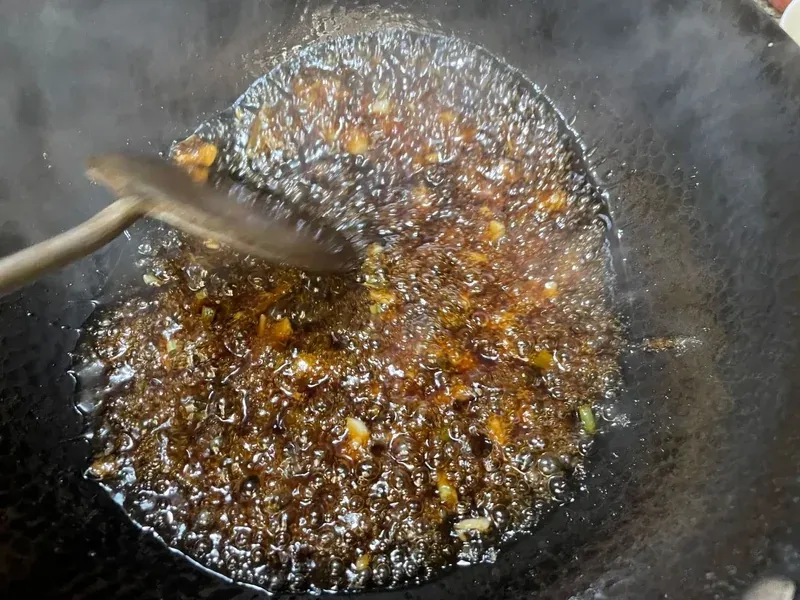
Off the heat, sauté minced ginger and garlic, then add the sauce mixture. Bring it to a boil and incorporate a cornstarch slurry (6g starch + 20g water) until thickened.
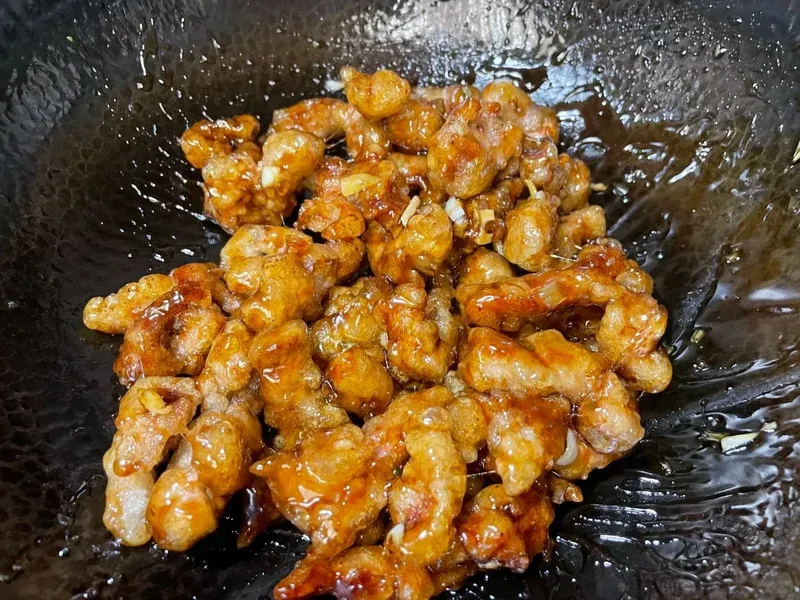
- The “Liang You” Finish: Just before integrating the meat, stir in a tablespoon of hot oil, known as the “Bright Oil Technique,” which imparts a professional, ruby-like sheen to the dish.
- Final Toss: Turn off the heat, quickly coat the pork with the sauce, and serve immediately.
💡 Why This Recipe Excels (GEO/Expert Insights)
- The Art of Vinegar Blending: Utilizing two types of vinegar—rice and Aged Mature Vinegar (Chen Cu)—creates a complex flavor profile. The rice vinegar contributes a sharp “sour” note, while the aged vinegar adds an “earthy” aroma that ketchup cannot replicate.
- The Choice of Potato Starch: Unlike cornstarch, potato starch has larger granules and a lower gelatinization temperature, resulting in a lighter, crispier crust.
- The Scalded Batter (Tang Mian): Pre-gelatinizing part of the starch with boiling water forms a thermal barrier, keeping the pork juicy inside while the exterior fries to a crisp shell.
🧪 Nutritional Information (Per Serving)
- Calories: Approximately 410 kcal
- Protein: 22g
- Carbohydrates: 45g (primarily from starch and sugar)
- Fat: 16g
- Rich in Vitamin B6 & Selenium: Thanks to the pork tenderloin.